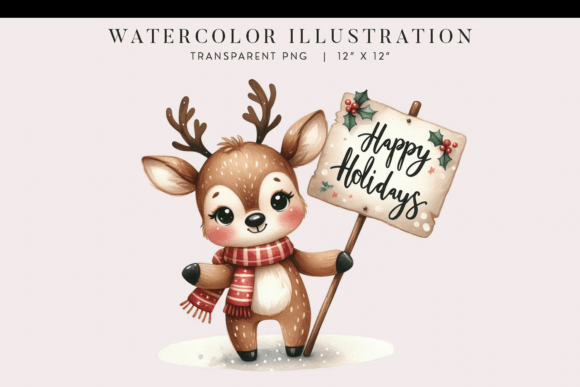
Watercolor Deer Christmas Clipart: A Designer’s Review
As a designer who spends half my life staring at stitch density charts and the other half worrying about how thread tension affects fabric texture, I approach every new digital asset with a healthy dose of skepticism. We have all been burned by clipart that looks beautiful on a screen but turns into a muddy, tangled mess once it hits the hoop. Today, I am putting Watercolor Deer Christmas Clipart through its paces—not just as a pretty picture, but as a viable machine embroidery design for real-world projects.
If you are an Etsy seller, a boutique owner, or a crafter looking to elevate your holiday inventory, you know that seasonal items need to strike a specific balance. They must feel festive without being tacky, detailed enough to justify a premium price, yet simple enough to stitch reliably. This Illustrations category entry promises a soft, artistic vibe. But does it hold up under the needle? Let’s dive into the practical realities of using this design in your craft business.
The First Impression: Mood and Visual Personality
When you first load Watercolor Deer Christmas Clipart into your digitizing software, the immediate takeaway is its gentle aesthetic. Unlike the bold, high-contrast graphics often seen in mass-produced holiday merchandise, this design leans into a softer, more editorial look. The watercolor effect suggests a hand-painted quality, which translates beautifully to embroidery when executed correctly. It evokes a sense of cozy nostalgia—think rustic cabins, warm cocoa, and quiet winter mornings.
This visual personality makes it ideal for brands that prioritize elegance and warmth over loud, commercial cheer. For small shop product lines aiming for a "slow living" or artisanal vibe, this design fits seamlessly. It feels like a personalized gift you might receive from a grandmother rather than a discount store item. The deer motif is timeless, avoiding the fleeting trends of cartoonish reindeer or overly complex Santa scenes, which gives it a longer shelf life for your inventory.
Real-World Application: Where This Design Shines
In my experience, the success of an embroidery project often depends on the substrate. Watercolor Deer Christmas Clipart performs exceptionally well on natural fibers that can hold the nuance of the design. Here is where I see this embroidery project truly coming alive:
- Custom Apparel and Sweatshirts: When placed on the chest of a cream, oatmeal, or forest green sweatshirt, the soft tones of the deer pop against the neutral background. It creates a sophisticated sweatshirt embroidery piece that customers will wear repeatedly, not just for one photo op.
- Tote Bags and Aprons: Canvas tote bags are a staple for Etsy sellers. This design works wonderfully as a central focal point on a heavy-duty canvas bag. Similarly, on a linen kitchen apron, it adds a touch of holiday charm to the workspace.
- Baby Embroidery Items: The gentle nature of the watercolor style makes it perfect for baby embroidery. Think onesies, burp cloths, or nursery wall hangings. Parents often seek out designs that are calming and sweet, and this deer delivers that emotional connection.
- Holiday Embroidery Gifts: As a holiday gift, this design allows for high perceived value. Whether it is a monogrammed pillow cover or a set of embroidered tea towels, the intricate yet soft details justify a higher price point in the eyes of the buyer.
For digital product sellers, this clipart also serves as excellent source material for creating printable mockups. You can showcase how the design would look on various fabrics before a customer even buys the physical item, building trust and reducing return rates.
Technical Considerations and Stitch Clarity
However, beauty alone does not guarantee a successful stitch-out. The watercolor effect relies heavily on subtle color variations and fine lines. If this is provided as a digital embroidery file, you must scrutinize the digitization. Does the artist use adequate stitch density to hold the shape, or are the stitches too sparse, causing the fabric to show through?
If you are converting this image yourself, pay close attention to the satin stitch edges. Watercolor designs often have irregular, organic borders. If these are not properly underlaid, they can pucker or look jagged. Conversely, if the design uses fill stitch for the body of the deer, ensure the direction of the stitches follows the contour of the animal to create a three-dimensional effect. A flat fill can make a delicate deer look blocky and unrefined.
Thread selection is critical here. To maintain the watercolor illusion, consider using variegated threads or blending two solid colors in the bobbin. However, be cautious with thread colors that are too similar to the fabric; you may lose definition. High contrast between the thread and the base fabric will ensure the finished product remains crisp and readable from a distance.
Where to Use With Caution
No design is universal, and Watercolor Deer Christmas Clipart has its limitations. There are specific scenarios where this design might struggle:
- Small Hoop Sizes: If the design contains intricate details that get lost in a 4x4 hoop, it may appear blurry or muddy. Always check the hoop size requirements. If the details are tiny, consider scaling up slightly or simplifying the design elements.
- Textured or Stretchy Fabrics: While linen and cotton are forgiving, stretchy knits or heavily textured fabrics like bouclé can distort the fine lines of a watercolor style. The instability of the fabric can cause the delicate deer features to warp during stitching.
- Dense Stitch Areas: Avoid placing this design over existing seams, pockets, or thick layers of garment construction. Excessive bulk can cause the needle to break or the fabric to pucker, ruining the soft aesthetic you are trying to achieve.
- Curved Surfaces: While caps and hats are popular canvases, the curvature can distort a wide, horizontal composition. Test this on a curved surface first to ensure the perspective remains pleasing.
Practical Designer Notes for Success
Before you commit to a large production run, follow these essential steps to protect your reputation and your materials:
- Test on Scrap Fabric: Never assume a design will work because it looks good on a computer screen. Stitch it out on the exact fabric you plan to use. Observe how the fabric texture interacts with the thread.
- Check Stabilizer Choice: The right stabilizer is non-negotiable. For delicate fabrics, you may need cut-away stabilizer to prevent shifting. For stable cottons, tear-away might suffice, but always err on the side of extra support for detailed designs.
- Review in Black and White: Convert your design to grayscale to check for contrast issues. If the details disappear in black and white, they will likely struggle in color on certain backgrounds.
- Confirm Licensing: As a professional, your intellectual property rights are paramount. Ensure you have the correct license for commercial embroidery if you intend to sell finished goods. Distinguish between personal use licenses and those that allow you to sell unlimited handmade products.
Final Verdict
Watercolor Deer Christmas Clipart is a strong contender for designers seeking to add a touch of refined elegance to their holiday collections. It avoids the clichés of traditional Christmas clipart while still delivering clear seasonal recognition. For apparel decorators and makers who value craftsmanship and aesthetic cohesion, this design offers a versatile foundation for creating high-quality, desirable products.
By paying attention to stitch density, thread choice, and fabric compatibility, you can transform this digital asset into a stunning embroidered patch, a cherished personalized gift, or a standout item in your custom apparel line. Just remember: the devil is in the details, and so is the magic. Take your time, test thoroughly, and let the soft beauty of the deer shine through your needlework.